Gearbox for Mixer: Why It Is Critical
A gearbox for mixer is essential for controlling speed, torque, and stability in modern
industrial mixing applications.
Mixers are widely used in industries such as chemical processing, food production, pharmaceuticals, and construction materials. According to
chemical mixing equipment standards, proper mechanical control is crucial for process safety and consistency.
Unlike standard applications, mixer gearboxes must handle demanding conditions, including high starting torque, continuous operation, and materials with varying viscosity.
Choosing the wrong gearbox can lead to poor mixing quality, increased downtime, and even equipment failure.
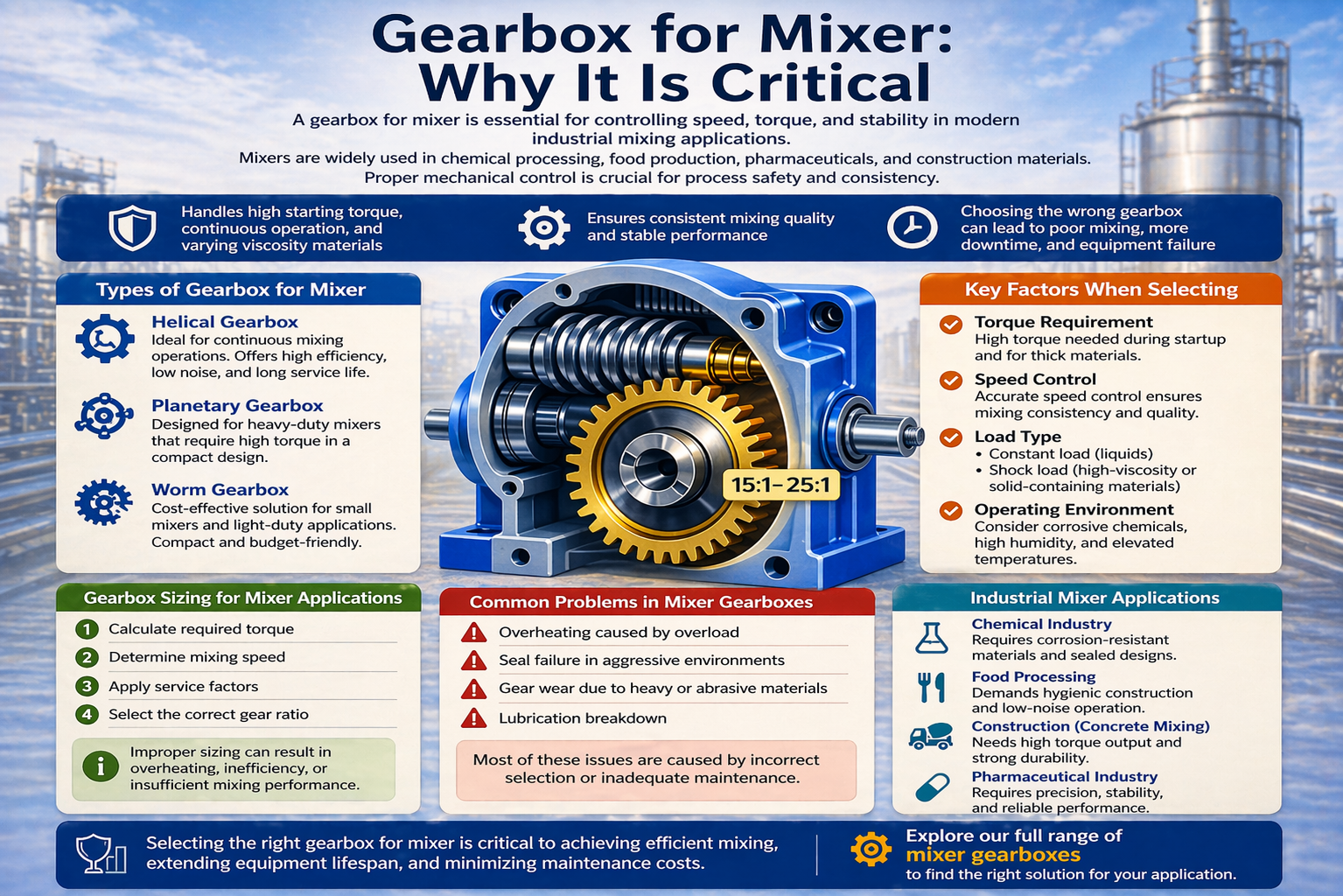
What Type of Gearbox Is Best for Mixer?
Different mixing processes require different gearbox designs depending on load and performance requirements.
Helical Gearbox
Best suited for continuous mixing operations where efficiency and low noise are important. These gearboxes provide smooth power transmission and long service life.
Planetary Gearbox
Ideal for heavy-duty mixers that demand high torque in a compact design. Widely used in industries with dense or high-resistance materials.
Worm Gearbox
A cost-effective solution for small mixers and light-duty applications. Suitable when budget and compactness are priorities.
Key Factors When Selecting Gearbox for Mixer
Selecting the right gearbox involves more than just choosing a type. It requires understanding core engineering principles such as
industrial mixing principles.
Torque Requirement
Mixers often require high torque, especially during startup or when processing thick materials.
Speed Control
Accurate speed control directly affects mixing consistency and product quality.
Load Type
- Constant load (liquids)
- Shock load (high-viscosity or solid-containing materials)
Operating Environment
Consider environmental conditions such as:
- Corrosive chemicals
- High humidity
- Elevated temperatures
Gearbox Sizing for Mixer Applications
Proper sizing is critical when selecting a gearbox for mixer systems.
Key steps include:
- Calculating required torque
- Determining mixing speed
- Applying service factors
- Selecting the correct gear ratio
Improper sizing can result in overheating, inefficiency, or insufficient mixing performance.
Common Problems in Mixer Gearboxes
Mixer gearboxes often operate under harsh conditions, which can lead to issues such as:
- Overheating caused by overload
- Seal failure in aggressive environments
- Gear wear due to heavy or abrasive materials
- Lubrication breakdown
Most of these problems are caused by incorrect selection or inadequate maintenance.
Industrial Mixer Applications
For real-world examples, explore
industrial mixer gearbox cases.
Chemical Industry
Requires corrosion-resistant materials and sealed designs.
Food Processing
Demands hygienic construction and low-noise operation.
Construction (Concrete Mixing)
Needs high torque output and strong durability.
Pharmaceutical Industry
Requires precision, stability, and reliable performance.
Conclusion
Selecting the right gearbox for mixer is critical to achieving efficient mixing, extending equipment lifespan, and minimizing maintenance costs.
By choosing the correct gearbox based on torque, speed, and environmental conditions, manufacturers can significantly improve operational performance.
Explore our full range of
mixer gearboxes
to find the right solution for your application.