Gearbox for Conveyor System: Why It Matters
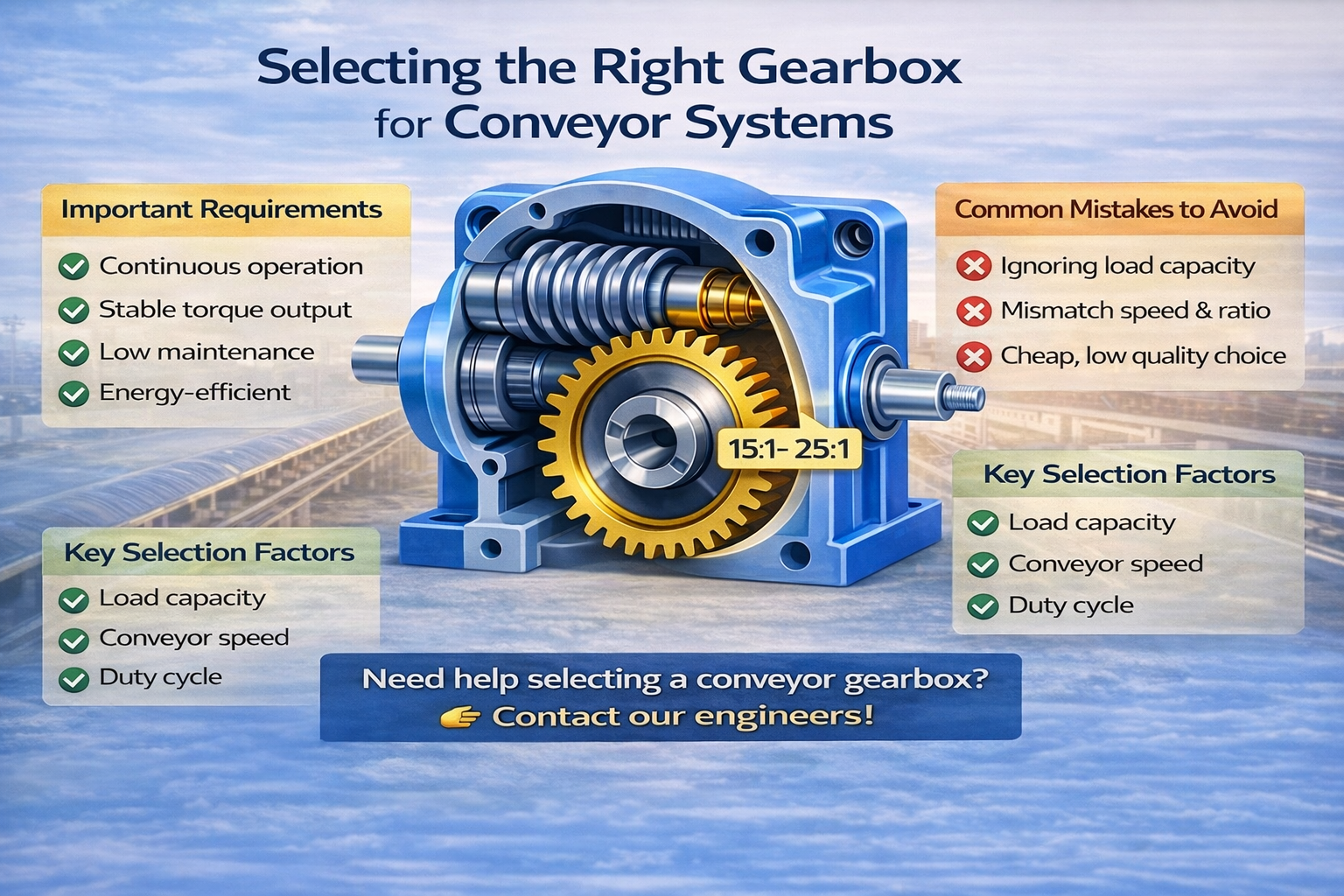
A gearbox for conveyor system plays a critical role in ensuring smooth material handling in industries such as mining, logistics, and manufacturing. It acts as the core power transmission component that bridges the gap between the motor’s high speed and the conveyor’s required low speed, while amplifying torque to move heavy loads efficiently. Without a properly selected gearbox, even the most robust conveyor system can fail to operate reliably—leading to costly disruptions in production workflows. Unlike general gearbox selection, conveyor systems require: continuous operation to keep material flow uninterrupted, stable torque output to prevent belt slippage, and high reliability to minimize downtime, all of which make the gearbox a make-or-break component for material handling operations. Choosing the wrong gearbox can lead to downtime, belt slippage, and increased maintenance costs, which is why understanding the specific needs of conveyor systems is essential for selecting the right transmission solution. For more insights into how gearboxes integrate with material handling equipment, explore conveyor system applications.
 What Type of Gearbox Is Used in Conveyor Systems?
 What Type of Gearbox Is Used in Conveyor Systems?
Different conveyor systems have unique operating conditions—from light-duty sorting conveyors in warehouses to heavy-duty long-distance conveyors in mining—so the type of gearbox must be matched to the application. Below are the most common gearbox types used in conveyor systems, along with their ideal use cases:
Helical Gearbox
Best for: Continuous operation, high efficiency, and low noise—making it ideal for manufacturing facilities, logistics warehouses, and medium-duty conveyors where consistent performance and minimal disruption are key. Helical gearboxes are widely used in conveyor systems due to their smooth operation and ability to handle moderate to high loads without excessive vibration, ensuring long service life even under constant use.
Worm Gearbox
Best for: Low-speed conveyors, cost-sensitive projects, and simple systems such as small packaging lines or light-duty material handling setups. Worm gearboxes offer a compact design and self-locking capability, which prevents the conveyor from backdriving when the motor is turned off—adding an extra layer of safety for low-speed applications where load holding is important.
Planetary Gearbox
Best for: Heavy load conveyors, compact space constraints, and high torque requirements—common in mining, cement, and heavy industry. Planetary gearboxes deliver exceptional torque density in a small footprint, making them perfect for long-distance conveyors, apron feeders, and other heavy-duty equipment that requires maximum power in limited space. Their robust design also handles shock loads and continuous heavy-duty operation, which is critical in harsh industrial environments.
Key Factors When Choosing Gearbox for Conveyor System
Selecting the right gearbox for a conveyor system goes beyond matching specs—it requires a deep understanding of the system’s operating conditions. Here are the critical factors to consider:
Load Capacity
Always calculate the total load based on the weight of the material being conveyed, the length of the belt, and any friction from the conveyor’s components (such as rollers or bearings). Under-sizing the gearbox for the load will lead to premature wear, overheating, and frequent breakdowns, while over-sizing increases costs and energy consumption. Accurate load calculation is the foundation of a reliable gearbox selection.
Speed Requirements
Different industries require different conveyor speeds—for example, food processing conveyors may need precise, slow speeds for sorting and packaging, while mining conveyors may require moderate speeds to move large volumes of material efficiently. The gearbox’s gear ratio must be carefully chosen to match the motor’s speed to the conveyor’s required operating speed, ensuring optimal performance and energy efficiency.
Duty Cycle
Whether the conveyor operates continuously (24/7 in mining or manufacturing) or intermittently (batch processing in packaging) directly affects gearbox choice. Continuous operation requires gearboxes with high efficiency and heat dissipation capabilities to prevent overheating, while intermittent operation may allow for more cost-effective options that prioritize durability during short bursts of use.
Environment
The operating environment is a critical factor that often gets overlooked. Consider the following conditions when selecting a gearbox: dust (common in mining and cement plants, which can infiltrate and damage internal components), moisture and salt exposure (in marine or offshore conveyor systems, requiring corrosion-resistant designs), and extreme temperatures (which can affect lubricant performance and gearbox materials). For guidance on designing conveyor systems that account for these environmental factors, refer to conveyor system design standards from CEMA, the leading authority in conveyor engineering.
How to Select Gearbox for Conveyor System (Step-by-Step)
Follow this step-by-step process to ensure you select the right gearbox for your conveyor system, avoiding common pitfalls and ensuring long-term reliability:
Step 1: Calculate Required Torque
Determine the total load the conveyor needs to move, including the weight of the material, belt, and any friction from rollers or guides. Use engineering formulas to calculate the torque required to overcome this load—this will be the baseline for selecting a gearbox with sufficient torque capacity. For detailed guidance on torque calculation and conveyor engineering, refer to belt conveyor engineering principles.
Step 2: Choose Gear Ratio
Match the motor’s output speed to the conveyor’s required operating speed by selecting the appropriate gear ratio. The gear ratio determines how much the gearbox reduces the motor’s speed and increases torque—higher ratios are ideal for low-speed, high-torque applications, while lower ratios suit faster conveyors with lighter loads.
Step 3: Select Gearbox Type
Based on the load capacity, speed requirements, duty cycle, and environment, choose the gearbox type (helical, worm, planetary) that best fits the application. For example, a heavy-duty mining conveyor would benefit from a planetary gearbox, while a small packaging conveyor might use a worm gearbox for cost and simplicity.
Step 4: Check Mounting Type
Ensure the gearbox’s mounting type (flange, foot, or shaft-mounted) is compatible with the conveyor’s design. Improper mounting can lead to misalignment, increased vibration, and premature gear wear—so verify that the gearbox can be securely attached to the conveyor’s frame and motor.
Step 5: Verify Safety Factor
Avoid under-sizing by verifying the gearbox’s safety factor, which is the ratio of the gearbox’s maximum torque capacity to the calculated required torque. A safety factor of 1.5 to 2.0 is recommended for most conveyor applications to account for unexpected shock loads or variations in material weight.
Common Problems in Conveyor Gearboxes
Even with careful selection, conveyor gearboxes can experience issues—but most of these problems stem from incorrect selection or poor maintenance. The most common issues include:
-
Overheating: Caused by insufficient heat dissipation, overloading, or incorrect lubrication—often a result of choosing a gearbox with insufficient torque capacity for continuous operation.
-
Oil leakage: Typically due to worn seals or improper mounting, which can lead to lubricant loss and internal gear damage.
-
Belt slipping: Occurs when the gearbox fails to deliver enough torque to move the load, usually from under-sizing or a mismatched gear ratio.
-
Gear wear: Caused by misalignment, contaminated lubricant, or overloading—all of which can be prevented by proper selection and regular maintenance.
👉 Most of these come from incorrect selection. Taking the time to evaluate your conveyor’s specific needs and choosing the right gearbox will significantly reduce the risk of these issues.
Real Industrial Applications
To illustrate how gearboxes perform in real-world conveyor systems, here are three key industry examples:
Mining Industry
Heavy-duty conveyors in mining operations move thousands of tons of ore and material daily, requiring gearboxes that can handle extreme shock loads, dust, and continuous operation. Planetary gearboxes are the top choice here due to their high torque density and robust design—they ensure the conveyor operates reliably even in the harshest mining environments. For real-world examples of how gearboxes are used in mining conveyors, check out real conveyor gearbox cases.
Food Industry
Conveyor systems in food processing require low-noise, hygienic gearboxes that can operate in clean environments. Helical and worm gearboxes are commonly used here—they offer smooth, quiet operation and can be designed with sealed housings to prevent contamination, ensuring compliance with food safety standards.
Logistics Warehouses
Warehouse conveyors (such as automated storage and retrieval systems) require efficient, low-maintenance gearboxes that can handle intermittent operation and frequent start-stop cycles. Helical gearboxes are ideal here due to their high efficiency and reliability, helping warehouses maintain smooth material flow without excessive downtime.
Conclusion
Choosing the right gearbox for conveyor system is not just about specifications—it directly impacts efficiency, reliability, and maintenance costs. A properly selected gearbox ensures smooth operation, minimizes downtime, and extends the lifespan of the entire conveyor system. By considering load capacity, speed requirements, duty cycle, and environmental conditions, and following the step-by-step selection process, you can choose a gearbox that meets your conveyor’s unique needs. Whether you’re looking for a heavy-duty planetary gearbox for mining or a compact worm gearbox for packaging, explore our range of industrial conveyor gearboxes to find the perfect solution for your application.