Planetary Gearbox: Working Principle, Advantages and Applications
A planetary gearbox is one of the most compact and high-torque transmission systems used in modern industrial applications. Known for its load-sharing mechanism and high efficiency, the planetary gearbox is widely applied in robotics, heavy machinery, wind turbines, and precision automation systems.
In this guide, we explain the planetary gearbox working principle, its structural advantages, and how to choose the right configuration for industrial use. Learn more about our planetary gearbox product range.
What Is a Planetary Gearbox?
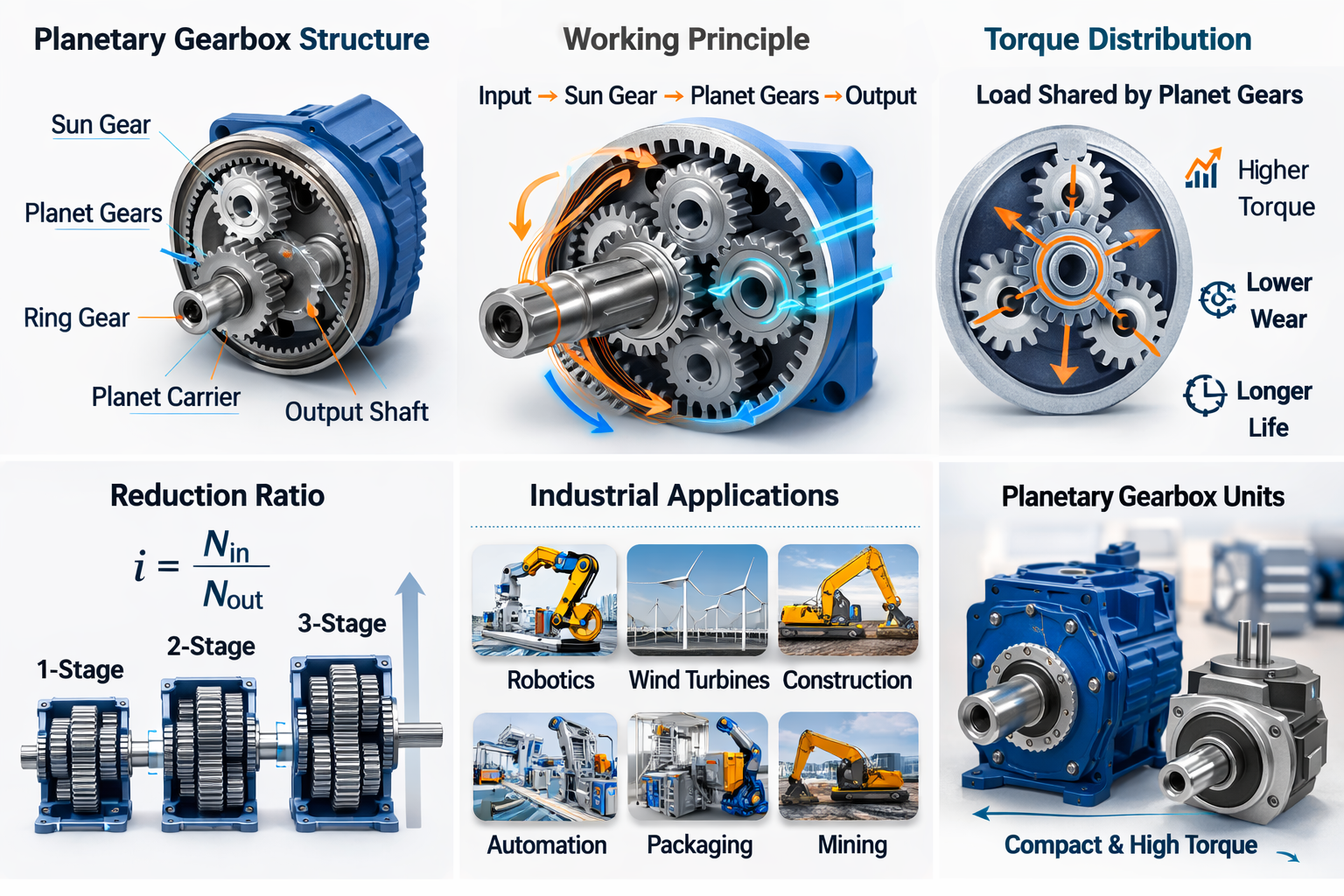
A planetary gearbox consists of three main components:
-
Sun gear (central gear)
-
Planet gears (multiple rotating gears)
-
Ring gear (outer gear)
These components work together to distribute load evenly across multiple contact points, resulting in high torque density and compact design.
Because of its coaxial structure, the planetary gearbox allows input and output shafts to align on the same axis.
Planetary Gearbox Working Principle
The planetary gearbox working principle is based on load sharing.
Here’s how it works:
-
The motor drives the sun gear.
-
The sun gear rotates the planet gears.
-
The planet gears roll inside the ring gear.
-
The planet carrier transmits torque to the output shaft.
Because multiple planet gears share the load, stress is distributed evenly, which improves torque capacity and durability. According to AGMA gear design standards, proper load distribution significantly improves gear durability and fatigue resistance.
7 Key Advantages of Planetary Gearbox
Explore our complete range of industrial gear reducers.
1. High Torque Density
A planetary gearbox can transmit high torque within a compact housing.
2. Compact Design
Due to its coaxial arrangement, the planetary gearbox requires less installation space compared to parallel-shaft systems.
3. High Efficiency
Efficiency levels often exceed 95%, depending on lubrication and load conditions.
4. Load Distribution
Multiple gear contacts reduce wear and extend service life. Bearing life calculation principles are commonly defined by SKF engineering guidelines for rotating machinery applications.
5. High Precision
Planetary gear reducers are suitable for servo and motion control applications.
6. Modular Design
Multi-stage planetary gearboxes can achieve high reduction ratios.
7. Versatile Applications
Used in:
-
Robotics
-
Wind turbines
-
Construction equipment
-
Industrial automation
-
Packaging machinery
Planetary Gearbox vs Helical Gearbox
Compared to a helical gearbox:
| Feature | Planetary Gearbox | Helical Gearbox |
|---|---|---|
| Torque Density | Very High | Moderate |
| Size | Compact | Larger |
| Shaft Alignment | Coaxial | Parallel |
| Cost | Higher | Moderate |
For detailed comparison, see our helical vs planetary gearbox guide.
Industrial Applications of Planetary Gearbox
An industrial planetary gearbox is ideal for:
-
High load environments
-
Limited installation space
-
Precision positioning systems
-
Continuous heavy-duty operations
See real-world planetary gearbox applications in our case studies.
How to Choose the Right Planetary Gearbox
When selecting a planetary gearbox, consider:
-
Required torque
-
Reduction ratio
-
Mounting configuration
-
Operating temperature
-
Duty cycle
-
Application environment
Working with a reliable industrial gearbox manufacturer ensures proper sizing and long-term reliability.
Proper industrial gearbox maintenance ensures long-term reliability. Manufacturers operating under ISO 9001 quality management standards ensure consistent production control and inspection procedures.
Final Thoughts
The planetary gearbox is a high-performance transmission solution designed for compactness, torque efficiency, and precision control. Understanding its working principle and advantages helps engineers select the right gearbox for demanding industrial applications.