Industrial Gearbox Maintenance: 10 Tips for Long Service Life
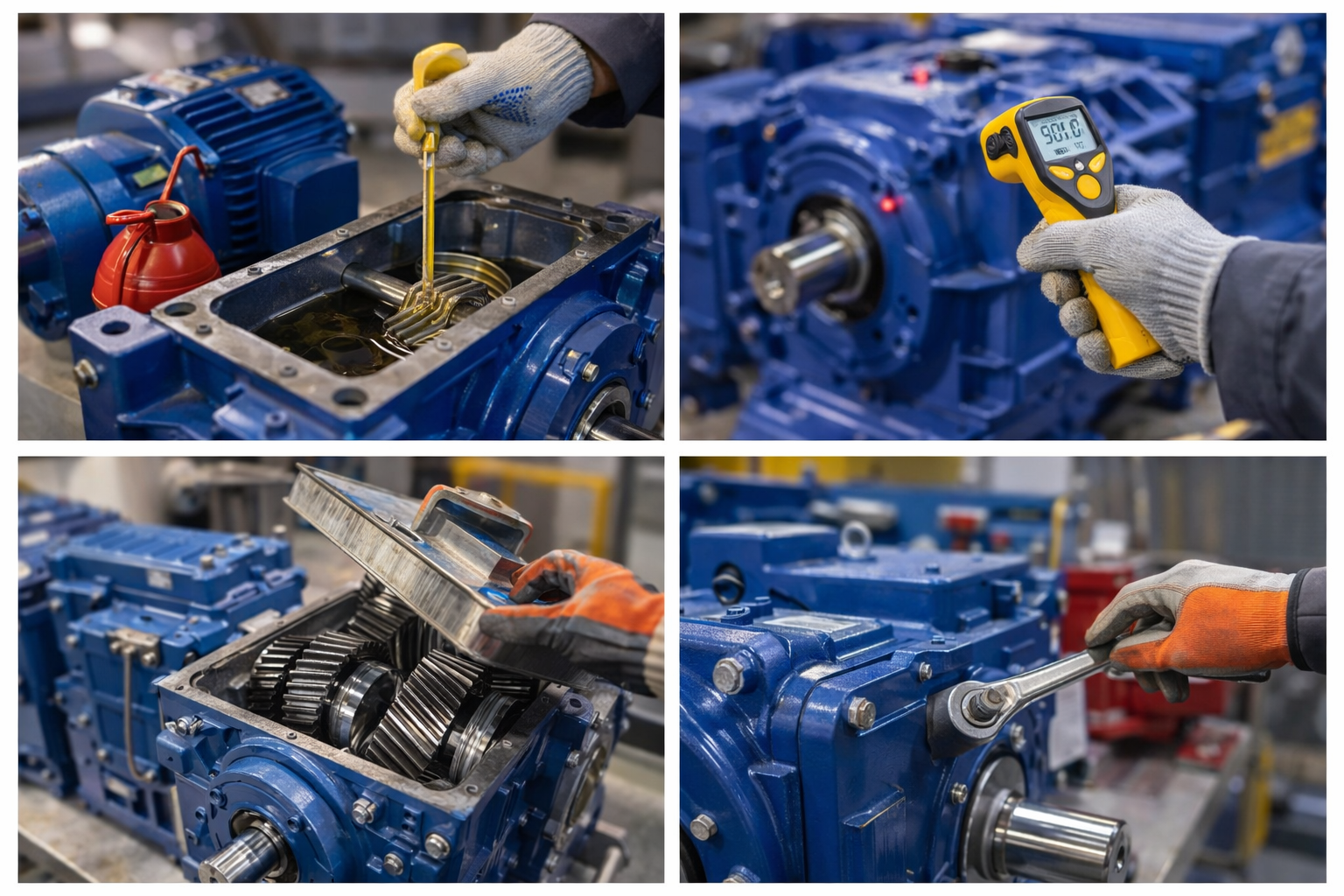
Proper industrial gearbox maintenance is critical for ensuring long service life, reducing downtime, and preventing costly mechanical failures. Even the most advanced gearbox design will fail prematurely without correct lubrication, inspection, and preventive care. To understand the basic working principles of transmission systems, you can also refer to our industrial gearbox guide.
This guide explains essential industrial gearbox maintenance practices that help protect heavy-duty transmission systems in manufacturing, mining, energy, and material handling industries.
Why Industrial Gearbox Maintenance Matters
Industrial gearboxes operate under:
-
High torque loads
-
Continuous duty cycles
-
Harsh environmental conditions
-
Variable operating speeds
Without structured maintenance, wear, overheating, and contamination can quickly lead to gear tooth damage or bearing failure.
Effective industrial gearbox maintenance improves:
-
Equipment lifespan
-
Energy efficiency
-
Operational safety
-
Total cost of ownership
1. Regular Lubrication Management
Lubrication is the most important part of industrial gearbox maintenance.
Key lubrication practices:
-
Use the correct oil grade
-
Monitor oil viscosity
-
Check oil contamination levels
-
Replace oil at recommended intervals
Insufficient lubrication causes overheating and accelerated wear. Fundamental lubrication principles, including viscosity selection and oil film formation, are widely discussed in authoritative engineering references such as Engineering ToolBox.
2. Monitor Oil Temperature
Excessive temperature indicates internal friction or overload.
Install temperature monitoring systems to detect:
-
Bearing overheating
-
Gear mesh friction
-
Oil breakdown
Stable operating temperature ensures gearbox reliability.
3. Conduct Routine Visual Inspections
Regular inspection helps detect early warning signs:
-
Oil leakage
-
Housing cracks
-
Abnormal noise
-
Vibration changes
Preventive industrial gearbox maintenance reduces unexpected shutdowns.
4. Check Gear Alignment
Misalignment increases load stress and reduces efficiency.
Ensure:
-
Proper shaft alignment
-
Secure mounting bolts
-
Stable foundation
Poor alignment leads to uneven gear wear.
5. Monitor Vibration Levels
Vibration analysis is a key predictive maintenance tool.
Abnormal vibration may indicate:
-
Bearing failure
-
Gear tooth damage
-
Imbalance
Condition monitoring improves maintenance accuracy. Vibration analysis techniques are commonly applied in predictive maintenance
according to international industrial monitoring standards.
6. Inspect Sealing Systems
Seals prevent contamination and oil leakage.
Damaged seals can allow:
-
Dust entry
-
Moisture contamination
-
Oil loss
Seal integrity is essential for industrial gearbox maintenance.
7. Maintain Proper Load Conditions
Avoid:
-
Overloading
-
Sudden shock loads
-
Frequent start-stop cycles
Stable load conditions protect gear teeth and bearings.
8. Replace Worn Components Promptly
Do not delay replacement of:
-
Bearings
-
Gaskets
-
Seals
-
Worn gears
Timely component replacement prevents larger failures.
9. Follow a Preventive Maintenance Schedule
Create a structured maintenance plan including:
-
Weekly checks
-
Monthly inspections
-
Annual overhaul
Preventive industrial gearbox maintenance reduces long-term repair costs.
10. Work with a Qualified Gearbox Manufacturer
Proper maintenance guidelines should follow manufacturer specifications.
Working with an experienced industrial gearbox manufacturer ensures:
-
Correct lubrication standards
-
Accurate inspection procedures
-
Technical support availability
Common Industrial Gearbox Maintenance Mistakes
Avoid:
-
Ignoring minor leaks
-
Using incorrect lubricant
-
Skipping inspection cycles
-
Operating beyond rated torque
These mistakes significantly shorten gearbox lifespan.
In addition to maintenance practices, selecting a reliable industrial gearbox manufacturer ensures long-term operational reliability.
Final Thoughts
Effective industrial gearbox maintenance is not optional — it is essential for maximizing performance and minimizing downtime.
By implementing structured inspection routines, proper lubrication management, and predictive monitoring techniques, industrial operations can significantly extend gearbox service life.
Investing in maintenance today prevents expensive repairs tomorrow.