Industrial Gearbox Failure: 9 Common Causes and Prevention Methods
Understanding industrial gearbox failure is essential for reducing downtime, preventing costly repairs, and ensuring long-term equipment reliability. Even well-designed gearboxes can fail prematurely if operating conditions, lubrication, or maintenance procedures are not properly managed.
To minimize breakdown risks, implementing structured industrial gearbox maintenance procedures is critical.
This guide explains the most common industrial gearbox failure causes, early warning signs, and proven prevention strategies.What Is Industrial Gearbox Failure?
Industrial gearbox failure refers to the inability of a gearbox to transmit torque efficiently due to mechanical damage, wear, misalignment, or lubrication problems.
Failure can occur gradually or suddenly depending on:
-
Load conditions
-
Lubrication quality
-
Environmental contamination
-
Installation accuracy
1. Insufficient Lubrication
Poor lubrication is the leading cause of industrial gearbox failure.
Problems caused by poor lubrication:
-
Gear tooth wear
-
Bearing overheating
-
Increased friction
-
Oil breakdown
Proper industrial gearbox maintenance reduces this risk significantly.
2. Overloading
Operating beyond rated torque capacity can cause:
-
Gear tooth cracking
-
Shaft bending
-
Bearing failure
Always verify load requirements during selection and installation.
3. Misalignment
Improper shaft alignment increases uneven stress on gears and bearings.
Symptoms include:
-
Abnormal vibration
-
Noise increase
-
Uneven wear patterns
4. Contamination
Dust, moisture, and metal particles can enter through damaged seals.
Contamination leads to:
-
Abrasive wear
-
Corrosion
-
Oil degradation
Seal inspection is critical.
5. Bearing Failure
Bearings support rotating components. When they fail:
-
Noise increases
-
Vibration intensifies
-
Gear misalignment occurs
Bearing damage often leads to complete gearbox failure.
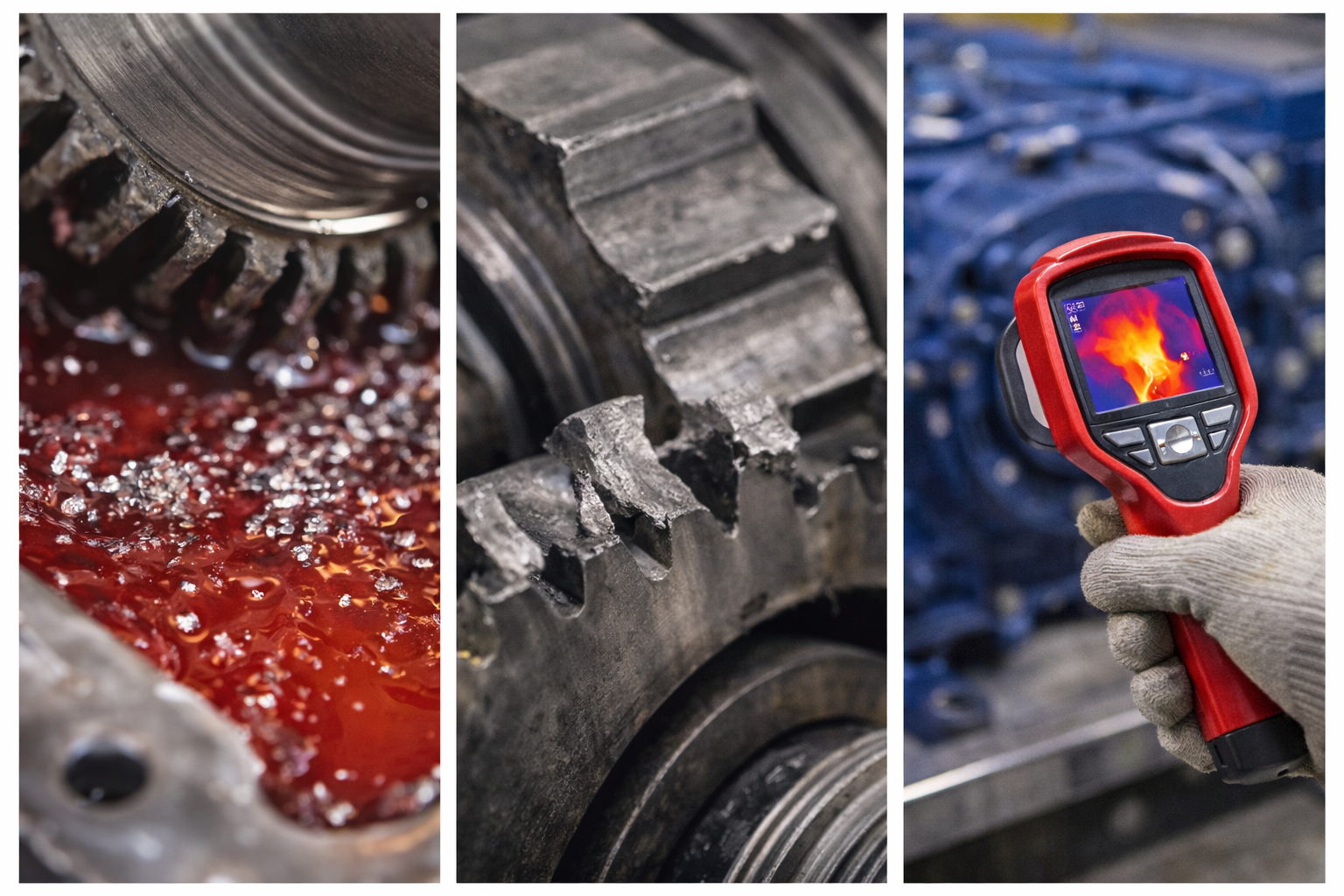
6. Gear Tooth Damage
Gear tooth failure may appear as:
-
Pitting
-
Spalling
-
Cracking
-
Breakage
This often results from overload or lubrication failure. Gear tooth failure mechanisms such as pitting and spalling are widely documented
in professional engineering references like Engineering ToolBox.
7. Excessive Temperature
High operating temperature accelerates oil degradation and material fatigue.
Install temperature monitoring systems to detect early overheating.
8. Improper Installation
Incorrect mounting or loose foundation bolts can cause:
-
Structural stress
-
Housing cracks
-
Shaft misalignment
9. Poor Manufacturing Quality
Low-quality materials and poor machining precision increase failure risk.
Working with a reliable industrial gearbox manufacturer reduces this issue.
Early Warning Signs of Industrial Gearbox Failure
Watch for:
-
Unusual noise
-
Increased vibration
-
Oil leakage
-
Metal particles in lubricant
-
Temperature spikes
Early detection prevents catastrophic damage.
How to Prevent Industrial Gearbox Failure
Prevention strategies include:
-
Regular lubrication checks
-
Condition monitoring
-
Load control
-
Proper installation
-
Scheduled preventive maintenance
A structured maintenance plan significantly reduces industrial gearbox failure risk.