Helical vs Planetary Gearbox: 7 Key Differences
When selecting a power transmission system, understanding the difference between helical vs planetary gearbox designs is essential.
If you are new to transmission systems, you can first review our industrial gearbox guide to understand basic gearbox working principles. Both are widely used in industrial applications, but their structure, torque capacity, efficiency, and cost vary significantly.
This guide provides a clear gearbox comparison to help engineers and buyers choose the right solution.
What Is a Helical Gearbox?
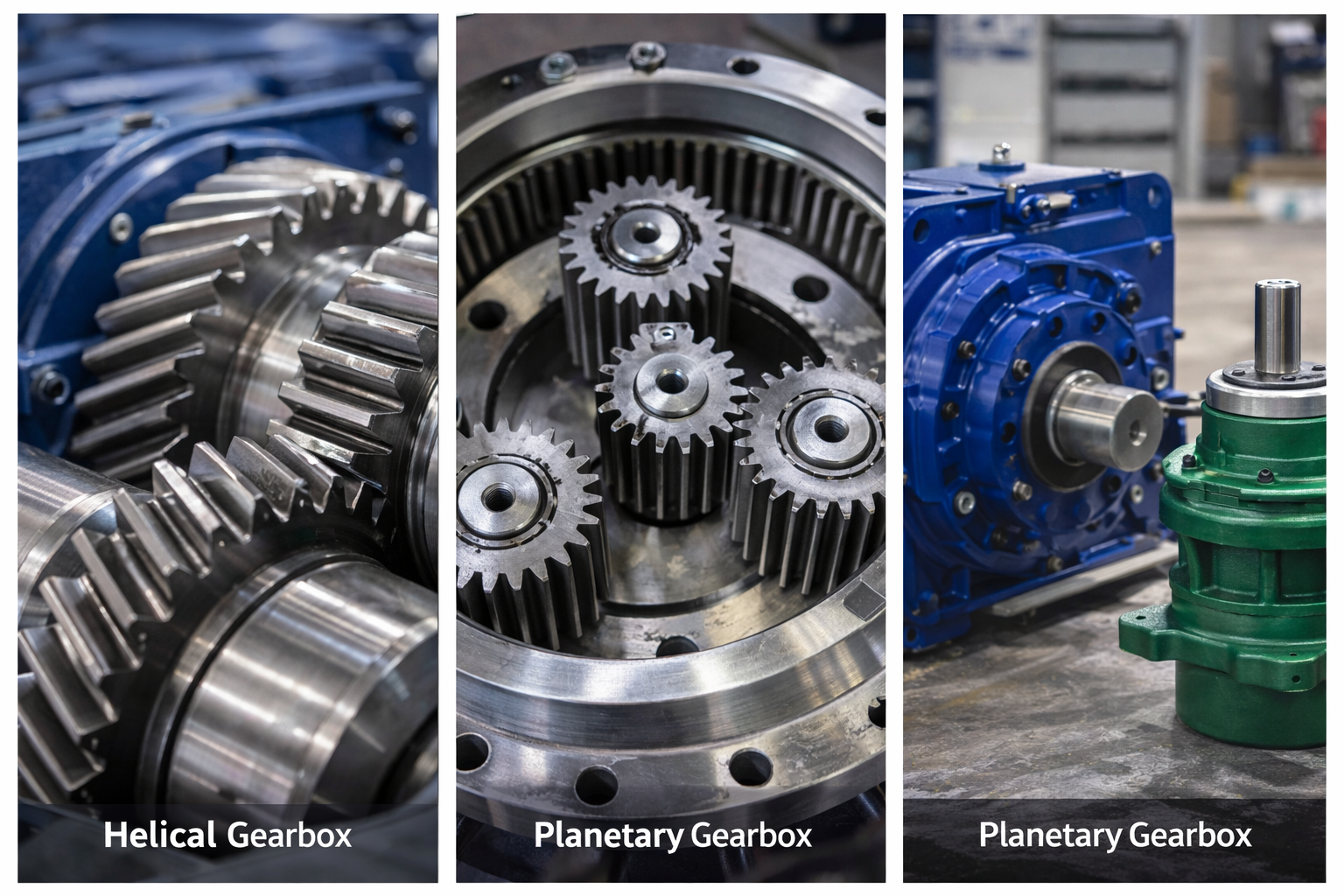
A helical gearbox uses angled teeth gears mounted on parallel shafts. It is known for:
-
Smooth operation
-
Low noise
-
High efficiency
-
Suitable for continuous duty
Helical gearboxes are commonly used in conveyors, pumps, compressors, and manufacturing systems. For a more detailed technical explanation, see our helical gearbox design guide.
What Is a Planetary Gearbox?
A planetary gearbox consists of:
-
Sun gear
-
Planet gears
-
Ring gear
Its compact structure allows:
-
High torque density
-
High load capacity
-
Coaxial input/output alignment
Planetary gearboxes are often used in robotics, heavy machinery, and precision equipment. Planetary systems are one of several major industrial gearbox types used in heavy-duty applications.
7 Key Differences Between Helical vs Planetary Gearbox
1. Structural Design
| Feature | Helical Gearbox | Planetary Gearbox |
|---|---|---|
| Shaft Layout | Parallel | Coaxial |
| Gear Arrangement | Linear | Centralized planetary |
Fundamental gear geometry principles and efficiency calculations are
widely explained in professional engineering resources such as Engineering ToolBox.
2. Torque Density
Planetary gearboxes provide higher torque density due to load sharing among multiple planet gears.
3. Size and Compactness
Planetary gear systems are more compact for the same torque output.
4. Efficiency
Both systems offer high efficiency (up to 95–98%), but efficiency varies based on load and lubrication.
5. Noise Level
Helical gearboxes typically operate more quietly in standard industrial applications.
6. Cost
Planetary gearboxes often cost more due to complex manufacturing requirements.
7. Application Suitability
Helical Gearbox:
-
Conveyor systems
-
Cement plants
-
General industrial drives
Planetary Gearbox:
-
High torque machinery
-
Robotics
-
Wind turbines
Which One Should You Choose?
Choose helical gearbox if:
-
You need continuous duty operation
-
Noise reduction is important
-
Cost control matters
Choose planetary gearbox if:
-
Space is limited
-
High torque density is required
-
Precision positioning is needed
Selecting the right gearbox configuration also depends on working with a reliable industrial gearbox manufacturer that understands application-specific requirements.
Final Thoughts
The decision between helical vs planetary gearbox depends on torque requirements, installation space, budget, and application type.
Both systems offer reliable performance when properly selected and maintained.