Gearbox Efficiency: How to Calculate and Improve It
Gearbox efficiency is an important factor when selecting an industrial gear reducer. It determines how much input power from the motor is effectively transmitted to the output shaft.
Higher gearbox efficiency means less energy loss, lower operating temperatures, and vastly improved machine performance. In modern industrial manufacturing, optimizing your power transmission is not just about mechanical reliability; it is also a vital step in reducing operational costs and lowering the carbon footprint of your facility.
Understanding gearbox efficiency helps engineers choose the most suitable reducer for demanding industrial equipment such as conveyors, mixers, and automated production systems.
What is Gearbox Efficiency?
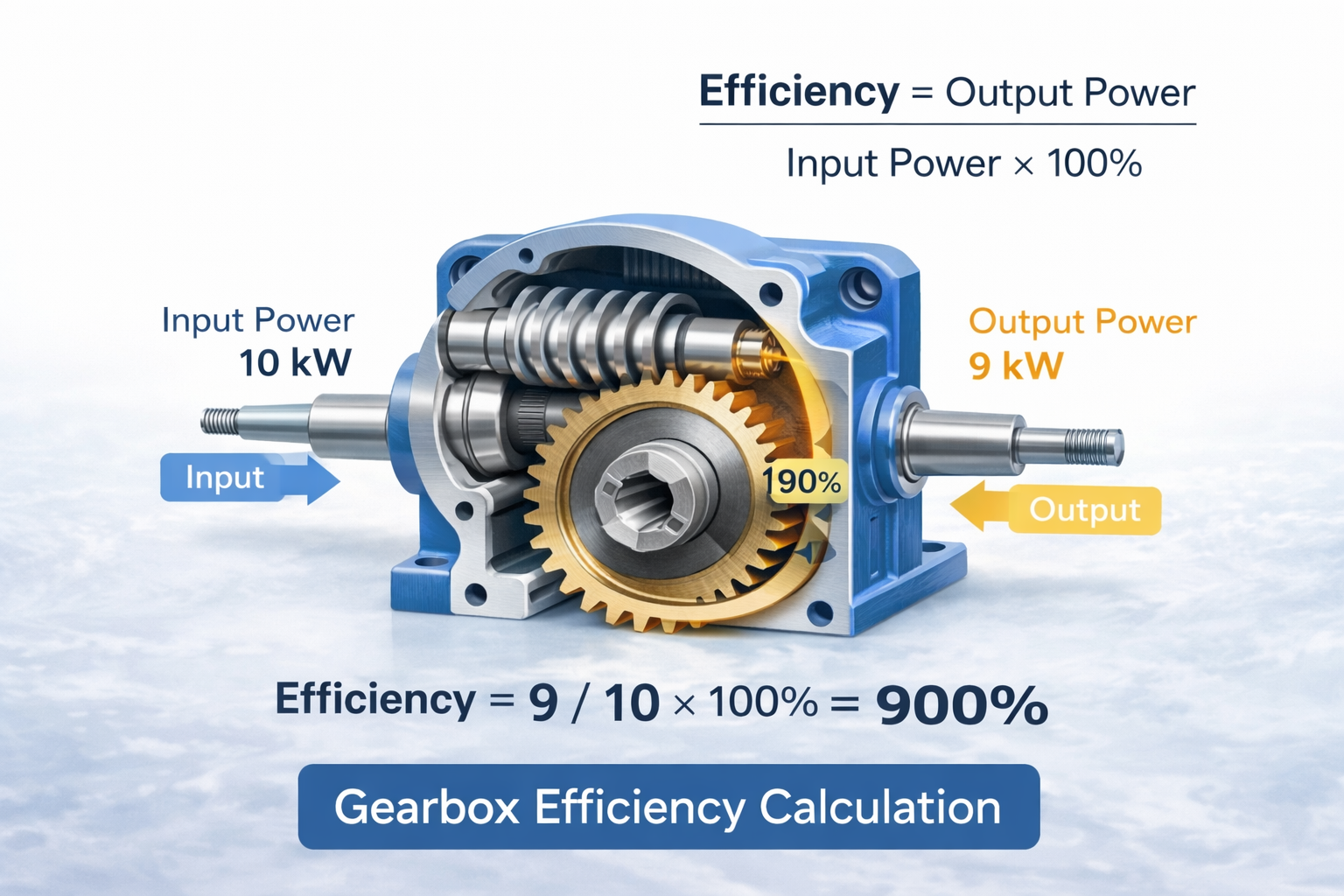
Gearbox efficiency refers to the percentage of input power that is successfully transferred to the output shaft. It represents the ratio of useful work performed by the gear system compared to the energy supplied to it.
It can be expressed using the following formula:
For example:
-
Input power = 10 kW
-
Output power = 9 kW
Efficiency calculation:
This means the gearbox loses about 10% of power due to friction, heat, and internal mechanical losses. Gear efficiency calculation methods are commonly defined in gear engineering standards published by AGMA. Every fraction of a percent matters in heavy-duty operations, as lost power directly translates to wasted electricity.
Typical Efficiency of Different Gearboxes
Different gearbox types yield entirely different efficiency levels based on their internal mechanical architecture.
| Gearbox Type | Typical Efficiency |
| Spur Gearbox | 95% – 98% |
| Helical Gearbox | 94% – 97% |
| Planetary Gearbox | 95% – 98% |
| Worm Gearbox | 50% – 90% |
The noticeably lower efficiency of worm gearboxes is mainly due to sliding friction between the worm and worm wheel. While they offer excellent self-locking capabilities, this high sliding action generates significant heat compared to other gear types.
Factors Affecting Gearbox Efficiency
Several factors influence gearbox efficiency. Understanding these core elements can help operators diagnose underperforming systems.
Gear design
Helical and planetary gears usually have higher efficiency because they rely on rolling contact rather than sliding friction. For high-efficiency applications, many industries choose planetary gearbox solutions because their multiple gear contacts distribute loads evenly and reduce energy loss.
Lubrication
Proper lubrication reduces friction and wear between gear teeth. Poor lubrication can significantly reduce gearbox efficiency. Proper lubrication is critical for gearbox performance, and many lubrication principles used in rotating machinery are explained in SKF engineering knowledge resources.
Gear alignment
Incorrect shaft alignment forces the gears to grind unevenly, drastically increasing internal friction and mechanical power loss.
Load conditions
Gearboxes operating outside their rated load range may experience efficiency losses. Overloading stresses the gear teeth, while underloading means the system is not operating at its optimal design point.
How to Improve Gearbox Efficiency
Improving gearbox efficiency helps reduce energy consumption and increase equipment reliability across your entire production line.
Choose the right gearbox type
For high-efficiency systems, helical or planetary gearboxes are often preferred. In many heavy-duty industrial systems, a heavy-duty helical gearbox is preferred because helical gears provide smoother engagement and higher transmission efficiency.
Use proper lubrication
High-quality synthetic lubricants reduce friction and minimize heat generation. Always ensure you are using the correct viscosity grade tailored to your load capacity.
Maintain correct operating conditions
Regular inspection and proper lubrication are essential, and following professional industrial gearbox maintenance tips can significantly improve gearbox efficiency and service life.
Conclusion
Maximizing gearbox efficiency is one of the most cost-effective ways to enhance your industrial operations. By selecting the right gear type, maintaining proper alignment, and utilizing high-quality lubrication, you can ensure your power transmission systems run smoothly and efficiently for years to come.
Industrial Applications of High-Efficiency Gearboxes
High-efficiency gear reducers are widely used in demanding sectors, including:
-
Conveyor systems
-
Packaging machines
-
Wind turbines
-
Industrial automation
-
Robotics equipment
You can also explore real industrial gearbox application cases to see how different gear reducers are used in conveyors, automation systems and heavy machinery.